

Memory foam mattresses contour to your body shape, providing pressure relief. Hybrid mattresses combine innerspring support with memory foam or latex comfort layers.
Choosing the right mattress can significantly affect your sleep quality and overall health. Memory foam mattresses have gained popularity for their ability to mold to the body, offering excellent pressure point relief and reducing motion transfer for undisturbed sleep. On the other hand, hybrid mattresses offer a blend of support and comfort, with coils providing bounce and improved airflow, and the foam layers adding cushioning.
This composition often leads to a more responsive feel and better temperature regulation. Whether you suffer from back pain or simply enjoy a plush sleeping surface, understanding the unique benefits of memory foam and hybrid mattresses is essential in making an informed decision. Selecting the ideal mattress hinges on individual preferences for firmness, support, and sleeping temperature.
Introduction To Mattress Types
Memory Foam and Hybrid Mattresses offer unique benefits for a good night’s sleep. Memory Foam is known for its pressure-relieving qualities, contouring closely to the body. This material responds to body heat and weight, providing a personalized sleep surface. Memory Foam also excels in motion isolation, making it ideal for those who share a bed.
On the other hand, Hybrid Mattresses combine innerspring coils with foam layers to offer a balanced sleep experience. They often provide better airflow and support than their foam-only counterparts. This design leads to a more responsive and cooler sleeping surface, favored by sleepers looking for a compromise between firmness and softness.
The Anatomy Of Memory Foam
Memory foam is unique due to its viscoelastic properties. Crafted from polyurethane with additional chemicals, it offers a high-density and pressure-sensitive sleeping surface. This special material softens in reaction to body heat, allowing it to contour to a person’s shape.
Upon removal of pressure, memory foam slowly returns to its original form. Its ability to evenly distribute weight and alleviate pressure points makes it a popular choice. Such a mattress provides support where it’s needed and comfort throughout the night.
Exploring Hybrid Mattresses
Hybrid mattresses offer a unique combination of materials. Memory foam layers pair with spring coils to provide comfort and support. This fusion creates an optimal sleep surface. The memory foam contours to the body, while coils offer bounce and improved airflow.
Their layered structure serves multiple functions. It relieves pressure points and reduces motion transfer. This is ideal for those sharing a bed. Hybrid mattresses also maintain a comfortable temperature throughout the night.

Credit: www.roomstogo.com
Comfort Factors In Focus
Memory foam mattresses excel in conforming to your body shape. This feature helps in evenly distributing body weight and reducing pressure points. Many people find this aspect essential for a comfortable sleep.
On the other hand, hybrid mattresses combine memory foam with springs. This design aids in temperature regulation. The springs allow air to flow more freely, which helps keep the mattress cool.
Support And Firmness Comparison
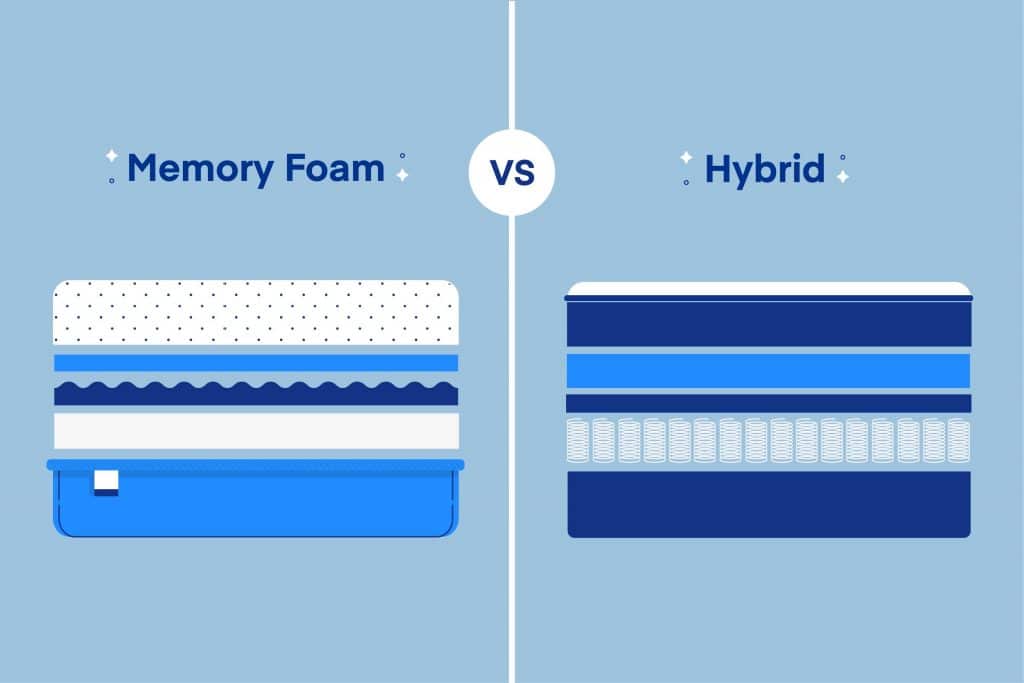
Memory foam mattresses offer various support levels. Generally, they provide a contouring hug that adapts to your body, alleviating pressure points. The support level in memory foam can range from soft to firm, catering to different sleep preferences. These mattresses often come in several densities, influencing the support level.
On the other hand, hybrid mattresses combine innerspring coils with foam layers. This design yields a diverse range of firmness options. Hybrid mattresses typically offer a more responsive feel and better edge support compared to their memory foam counterparts. Their firmness can vary, providing either a plush or a solid sleeping surface, based on the coil and foam composition.
Credit: amerisleep.com
Durability And Lifespan
Memory foam mattresses are known for their durability, typically lasting between 7 to 10 years with proper care. These mattresses conform to your body, which helps them to recover and maintain their shape over time. Regular rotation can extend their lifespan.
The longevity of hybrid mattresses varies, often depending on the quality of materials used. A well-made hybrid mattress can last upwards of 10 years. They combine innerspring with memory foam or latex layers, which may result in greater durability compared to memory foam alone.
Motion Transfer And Sleep Quality
Memory foam mattresses excel in isolating movement compared to hybrid models. This quality makes them ideal for sleepers who share a bed. As one person moves, the other is less likely to feel it. This reduces disturbances during the night.
Hybrid mattresses, however, are designed with a combination of coils and foam. They provide a balance of support and comfort but are less effective at isolating movement. This might affect individuals who are light sleepers, as they might experience slight disturbances caused by movements.
The choice between memory foam and hybrid can greatly impact sleep quality. Those needing uninterrupted sleep might prefer memory foam. Those who prioritize a balance of support and comfort might lean towards hybrids.
Investment And Value
Memory foam mattresses often come with a lower initial cost compared to hybrid options. Still, hybrid mattresses may offer better durability and support. Analyzing the cost requires considering not just the price tag, but also the lifespan and comfort provided over the years. A hybrid mattress, with its combination of foam and springs, can lead to improved sleep quality and long-term savings due to less frequent replacement needs.
The value of a mattress should also include its ability to maintain shape and firmness. Memory foam excels in pressure relief but may sag over time. Hybrids balance support and comfort, offering a resilient sleeping surface. Consumers must weigh these aspects to determine the best investment for their sleep and wallet.
Making The Right Choice
Your sleeping position often dictates the type of mattress best suited for you. Side sleepers typically prefer memory foam for its pressure-relief qualities. Back and stomach sleepers might lean towards hybrid mattresses for extra support.
Consider your weight as well. Heavier individuals may find that hybrid mattresses offer better support and durability. Those with a lighter frame might enjoy the plush comfort of memory foam. Each mattress type distributes weight differently, which is crucial for restful sleep.
|
Weight Category |
Memory Foam |
Hybrid Mattress |
|---|---|---|
|
Lightweight |
Good |
Acceptable |
|
Average Weight |
Very Good |
Excellent |
|
Heavyweight |
Fair |
Superior |
Final Thoughts On The Comfort Clash
Understanding your unique sleeping preferences is vital when selecting a mattress. The choice often hinges on desired support and comfort levels. Memory foam mattresses offer pressure relief and body contouring, which may benefit side sleepers and those with joint pain. Hybrid mattresses, combining springs and foam, provide a balance of bounce and cushioning, well-suited for those with varied sleeping positions.
Consider your sleep habits and any health concerns. For example, memory foam’s heat retention might not suit hot sleepers. Conversely, hybrids often have better airflow, which can keep you cooler. Assess the mattress’s firmness, durability, and motion isolation to ensure your sleep is undisturbed and restful.
Your final choice should enhance sleep quality and align with your budget. Don’t forget to check for trial periods and warranties to make an informed and confident decision.
Frequently Asked Questions
Is Hybrid Better Than Memory Foam?
Hybrid mattresses combine innerspring support with memory foam comfort, potentially offering the best of both worlds. Personal preference and specific sleep needs determine the best choice for an individual.
What Are The Negatives To A Hybrid Mattress?
Hybrid mattresses can be expensive, potentially heavy, and may have limited motion isolation. Some users report heat retention and a shorter lifespan compared to other mattress types.
Which Lasts Longer, Memory Foam Or Hybrid?
Hybrid mattresses typically outlast memory foam due to their coil support system, which enhances durability and longevity.
Is A Hybrid Or Foam Mattress Better For Back Pain?
Choosing between a hybrid and a foam mattress for back pain depends on personal preference. Hybrids offer support and cushioning, beneficial for spinal alignment. Foam mattresses, especially memory foam, provide excellent pressure relief. Consider your comfort preferences and specific back issues when selecting.
Conclusion
Choosing between a memory foam and a hybrid mattress depends largely on your personal comfort preferences and sleep needs. Memory foam offers contouring support, ideal for pressure relief, while hybrid mattresses provide a balance of support and bounce. Evaluate your priorities, such as firmness and temperature regulation, to make the best decision for a restful sleep.
