

An air mattress for a hospital bed enhances patient comfort and prevents pressure ulcers. It’s designed specifically to fit a hospital bed’s dimensions and features.
Hospital beds demand special mattresses like air mattresses to cater not only to comfort but also to the critical health needs of patients. These mattresses use innovative technology to adjust the pressure automatically, responding to the patient’s weight, movement, and position.
An air mattress can significantly improve the quality of care for individuals with limited mobility, those recovering from surgery, or patients with ongoing health issues that require extended bed rest. Ensuring optimal patient care, these mattresses help reduce the risk of bedsores and aid in better circulation, making them a vital component of medical care in hospital settings. Effective patient care relies on the right equipment, and an air mattress tailored for hospital beds is a cornerstone for achieving that goal.
Benefits Of Air Mattresses In Medical Settings
Air mattresses for hospital beds significantly improve patient comfort. With their flexibility, they adapt to a patient’s body shape. This personal fit reduces discomfort and restlessness.
The design of these mattresses plays a key role in preventing pressure ulcers. Pressure ulcers, or bedsores, are a risk for patients in prolonged bed rest. Air mattresses help by evenly distributing weight. This action reduces pressure points that cause skin breakdown.
Types Of Air Mattresses For Hospital Beds
Static air mattresses provide simple support for hospital patients. They don’t have complex parts. They are like regular beds but designed for medical needs. Patients rest on them without moving parts beneath.
Alternating pressure mattresses helps to prevent bedsores. They use air cells that inflate and deflate. This design changes pressure points on the patient’s body.
Low-air-loss mattresses are special. They have tiny holes to blow out air. This keeps the skin cool and dry. It is great for healing sores and preventing moisture buildup.
Key Features To Look For In Hospital Air Mattresses
Hospital air mattresses must support the body evenly. They prevent pressure sores by spreading a patient’s weight. Advanced materials create a comfortable, supportive surface. Patients rest better with proper support and pressure distribution.
Control features are vital for patient comfort. Mattresses with adjustability and firmness controls can adapt to individual needs. These features allow caregivers to modify the mattress for the best support.
High-quality air mattresses last longer and are easier to maintain. Look for options that offer durability and ease of cleaning. These mattresses should withstand frequent use and be simple to disinfect. Choosing a model with a removable, machine-washable cover helps keep the sleeping environment hygienic.
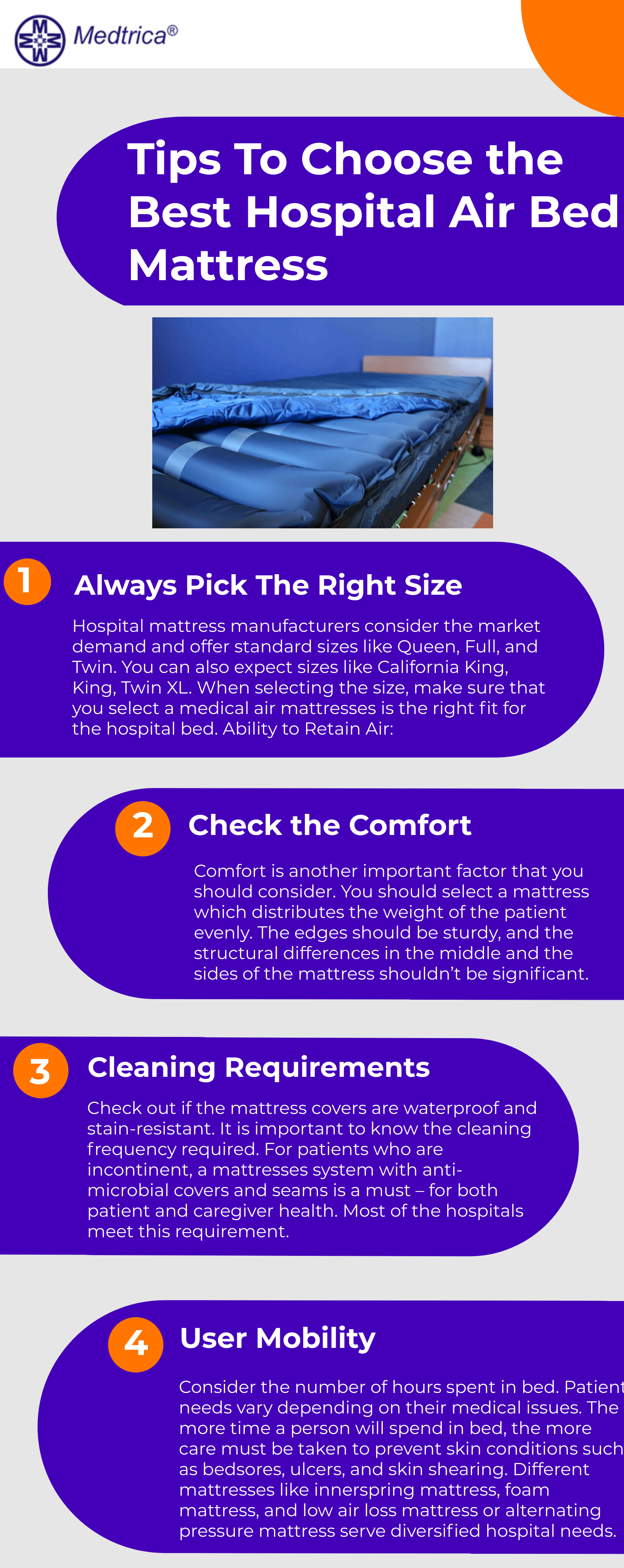
Credit: medtrica.com
Operating An Air Mattress: Best Practices
Proper setup of an air mattress is crucial for patient comfort and safety. Begin by placing the mattress flat on the hospital bed frame. Ensure it’s securely fastened, with no wrinkles or folds. Check the power source before turning on the pump to inflate the mattress.
Adjusting the mattress to meet patient needs is vital. Alter firmness levels to aid in preventing bedsores and enhance blood circulation. Consult with a healthcare provider to determine the optimal settings for the individual’s condition.
Regular maintenance extends the lifespan of an air mattress. Clean the surface with mild detergent, and check for leaks or tears. Inspect the pump’s operation and efficiency bi-weekly. Following these maintenance tips contributes to a hygienic and functional air mattress.
Patient Safety And Air Mattresses
Air mattresses are crucial for hospital beds to enhance patient comfort and safety. They help by reducing pressure ulcers and improving blood circulation. To minimize risks, regular checks are needed. This ensures the mattress is functioning well.
Staff training is key for effective monitoring. They can spot issues early. This prevents bigger problems later. Regularly scheduled mattress inspections help catch early signs of wear or damage.
Complications can arise if an air mattress fails. These include skin breakdown and increased infection risks. Keeping a checklist for daily inspection can help. This includes checking for leaks, proper inflation, and cleanliness.

Credit: www.sleepadvisor.org
Integrating Air Mattresses Into Hospital Care Routines
Training healthcare staff is critical for the effective use of air mattresses in hospitals. These specialized mattresses are essential for patients who spend long hours in bed, aiding in preventing pressure sores and enhancing comfort. Staff must learn to operate, maintain, and adjust settings correctly.
Protocols for bed-bound patients include routine inspections of the air mattress surface, checking for leaks, and ensuring it is clean and functional. Scheduled turning off the patient to avoid pressure accumulation is also necessary. Education on these protocols is key to patient well-being.
Case Studies: Improving Patient Outcomes With Air Mattresses
Patient comfort and recovery rates greatly benefit from air mattresses designed for hospital beds. Notable cases include a reduction in bedsores and an improvement in sleep quality among patients. These mattresses promote better circulation and reduce pressure on the body. This supports faster healing, particularly for long-term care patients.
Statistics paint a clear picture of the advantages. Facilities using air mattresses have seen a 20% drop in pressure-related skin conditions. They also report a 25% improvement in patient satisfaction regarding sleep comfort. This data underscores the impact of air mattresses on both physical and mental health components of recovery.
| Patient Outcome | Improvement Percentage |
|---|---|
| Pressure Ulcers | 20% Decrease |
| Sleep Quality | 25% Increase |

Credit: www.amazon.com
Choosing The Right Air Mattress For Different Patient Needs
Selecting an air mattress for a hospital bed requires careful consideration. One must evaluate a patient’s specific needs. This includes weight, mobility, and risk of pressure ulcers. Mattresses come with features like adjustable pressure, firmness, and support. Weight capacity matters for heavier patients. For those with limited movement, choose a mattress that reduces friction. Patients prone to bedsores need a mattress with excellent pressure relief.
To match the correct mattress, review patient profiles. A table of feature comparisons aids in decision-making.
| Patient Profile | Required Feature |
|---|---|
| High Risk of Bedsores | Advanced Pressure Relief |
| Limited Mobility | Low-friction Surface |
| Higher Weight | Increased Weight Capacity |
Advancements In Air Mattress Technology
Air mattress technology for hospital beds has seen significant strides. High-tech features and functionalities are now standard. These mattresses offer pressure relief and support. Clinical settings reap the benefits of mattresses that reduce the risk of bedsores and aid in patient recovery.
New air mattress designs cater to different patient needs. They come with adjustable settings and are easy to clean. This aspect is crucial in maintaining hygiene and comfort. The use of materials that can easily conform to a patient’s body shape allows for improved care and comfort.
Looking toward the future, air mattresses will likely incorporate smart technology. This includes sensors to monitor pressure levels and adjustments for optimum patient care. Durability and sustainability will also be key. Innovations may lead to better patient outcomes and enhance the role of this technology in health settings.
Essential Care Instructions For Air Mattresses
Maintaining an air mattress used in hospitals is key for patient comfort and health. A thorough, non-toxic cleaning solution should be used regularly. It’s wise to sanitize the surface weekly, ensuring that you cover all areas. Dust mites and other allergens must be removed to avoid infections.
Check for wear and tear often. Pinholes or tears can lead to leaks. Punctures should be patched promptly with repair kits provided by the manufacturer. Valve integrity is critical for maintaining proper inflation levels.
Replacement of an air mattress should happen every two to three years. Or it might be needed sooner if it shows signs of damage. Always follow the manufacturer’s guidelines for the best care practices.
Frequently Asked Questions For Air Mattress For Hospital Bed
Can You Put An Air Mattress On A Hospital Bed?
Yes, you can place an air mattress on a hospital bed for enhanced patient comfort, provided it fits appropriately and maintains bed functionality. Ensure the mattress supports any required adjustments and medical considerations.
Why Do Hospitals Use Air Mattresses?
Hospitals use air mattresses to prevent pressure ulcers in bedridden patients. These mattresses reduce pressure on the skin by alternating air pressure, improving circulation and comfort.
Can You Bring an Air Mattress To the Hospital?
Patients may bring an air mattress to a hospital, but first, confirm with the hospital’s policy to ensure compatibility with their care standards.
Why Air Mattress Is Used For A Bed Bedridden Patient?
Air mattresses for bedridden patients help prevent pressure ulcers by distributing weight evenly and reducing skin breakdown. They enhance comfort and support through adjustable firmness levels, promoting better sleep and healing.
Conclusion
To wrap up, air mattresses designed for hospital beds offer patients enhanced comfort and critical healing support. Their advanced features combat bed sores, promote circulation, and ensure better rest. Choosing the right air mattress can significantly improve recovery periods, making them a smart investment for healthcare settings.
Prioritize patient care with a quality air mattress.

